A borderline spectrum test is usually a self-reflection questionnaire that asks whether your emotions, relationships, self-image, impulsive urges, anger, emptiness, or abandonment fears resemble patterns often discussed around borderline personality disorder. It can help you organize concerns, but it cannot diagnose BPD.
If you searched for a "borderline spectrum test," you may be trying to understand a result from an online quiz, compare it with a BPD test, or decide whether your traits are serious enough to discuss with a professional. If your first question is simply "do I have BPD?", the Do I Have BPD Test guide gives a safer self-check path before you label yourself. This guide explains what the phrase usually means, how to read results without overreacting, and when broader screening or clinical care is the safer next step.
In this guide
Short answer: A borderline spectrum test can be useful when it helps you notice repeated patterns, but the result should be treated as a conversation starter. It is most meaningful when symptoms are persistent, impairing, relationship-linked, and appear across several areas of life, not just during one breakup, crisis, or stressful week.
What Does a Borderline Spectrum Test Measure?
Most borderline spectrum tests try to capture traits that sit near the broader clinical picture of borderline personality disorder. The word "spectrum" is usually used informally. It suggests that people may report some borderline-like traits without meeting criteria for a diagnosis, or may have mixed patterns that deserve more careful assessment.
A typical self-reflection result may ask about emotional intensity, fear of abandonment, unstable relationships, identity confusion, impulsive behavior, anger, emptiness, dissociation, self-harm risk, or rapidly changing views of yourself and other people. Those areas overlap with how major health sources describe BPD. The National Institute of Mental Health explains that BPD can involve instability in mood, behavior, self-image, and relationships. The NHS also groups symptoms around emotional instability, disturbed thinking, impulsive behavior, and intense but unstable relationships.
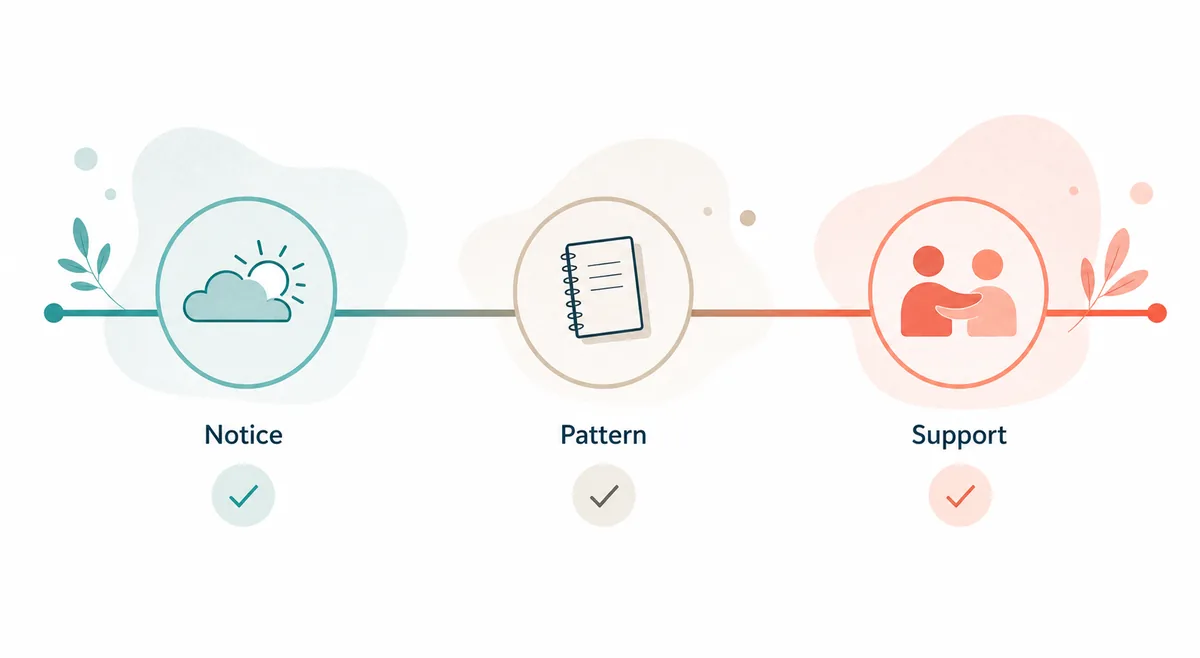
That overlap matters, but it does not make a spectrum test diagnostic. Online tests often simplify complex clinical patterns into short result bands. They may miss trauma context, bipolar mood episodes, depression, anxiety, ADHD, substance use, relationship abuse, grief, cultural context, or safety risk. A result can point you toward better questions; it should not become a label you carry alone.
Why a Borderline Spectrum Test Is Not a Diagnosis
A diagnosis requires a qualified professional to evaluate duration, severity, impairment, context, safety, medical history, and other possible explanations. A test result cannot know whether your answers came from a temporary crisis, an unsafe relationship, a trauma reminder, a sleep-deprived week, grief, medication effects, substance use, or another mental health condition.
There is also a language problem. "Borderline spectrum" can sound clinical, but the phrase is often used by quizzes, forums, and educational pages in different ways. One site may mean broad personality traits. Another may mean BPD-like features. Another may be comparing several personality styles. Before taking the result seriously, read what the test claims to measure, who created it, whether it gives medical disclaimers, and whether it encourages professional follow-up instead of certainty.
| Result type | What it can suggest | What it cannot prove |
|---|---|---|
| Low range | You may not currently report many borderline-like traits on that questionnaire. | It cannot rule out distress, trauma, depression, anxiety, or a future clinical concern. |
| Moderate range | Some patterns may be worth tracking, especially if they repeat in relationships. | It cannot confirm BPD or identify the main cause of the pattern. |
| High range | Your answers may justify broader screening and a professional conversation. | It cannot diagnose BPD, replace assessment, or decide treatment by itself. |
| Mixed or confusing result | The test may be too broad, or your symptoms may cross several categories. | It cannot separate BPD from bipolar disorder, trauma, ADHD, depression, or relationship safety issues. |
How to Read Borderline Spectrum Test Results Safely
Read the result as a prompt to collect examples. Specific examples are more useful than a result label. Instead of writing "I scored high on a borderline spectrum test," write "I often panic when someone changes plans, send repeated messages, feel ashamed afterward, and then avoid them for days." That kind of example helps you compare patterns, seek support, and reduce harm.
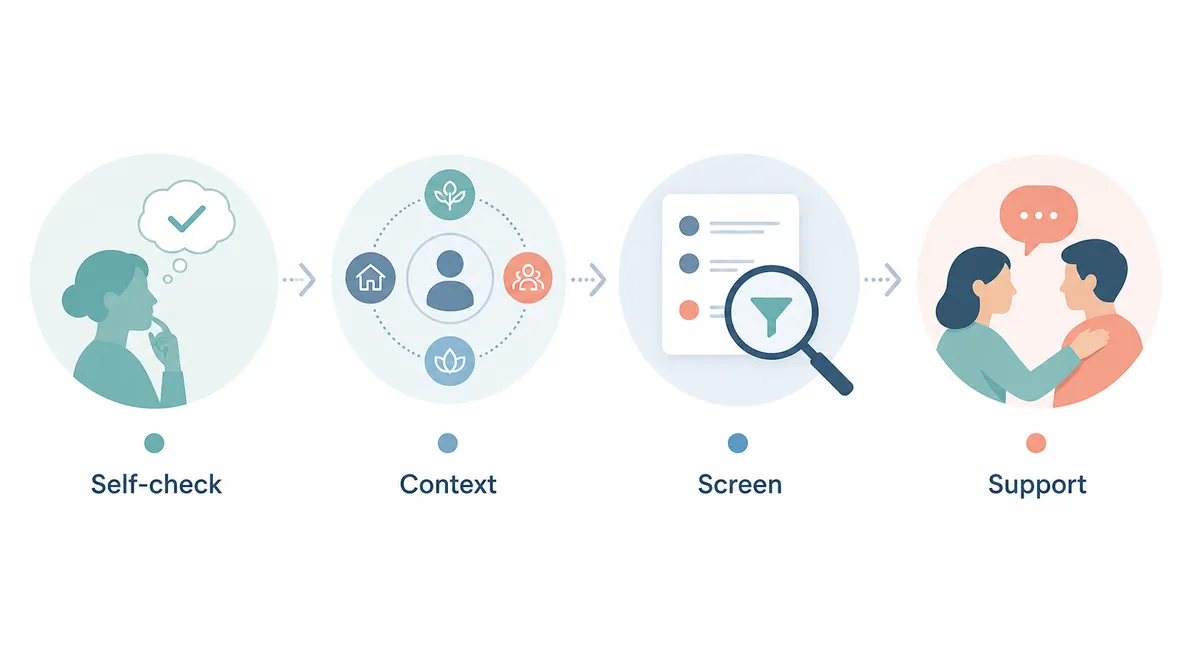
Use a four-part interpretation
- Pattern: Did similar reactions happen repeatedly over months or years, or mainly during one current crisis?
- Impairment: Are relationships, school, work, sleep, self-care, finances, or safety affected?
- Context: Could trauma, abuse, grief, substances, sleep loss, depression, anxiety, bipolar symptoms, ADHD, or medical factors explain the result?
- Safety: Are there self-harm urges, suicidal thoughts, violence, stalking, unsafe driving, or substance-related risk?
If the result is high but you are functioning well, do not dismiss it automatically. Some people keep work, caregiving, or school together while privately struggling with intense emotional swings or shame. If that sounds familiar, compare your result with the Quiet BPD Test and the High-Functioning BPD guide. If the result is low but you feel unsafe, the safety concern matters more than the score.
Borderline Spectrum Test vs BPD Test
A borderline spectrum test is usually broader and more exploratory. A BPD test or BPD screening page is usually more directly organized around borderline personality disorder symptoms. Neither can diagnose you, but they answer different questions.
| Question | Borderline spectrum test | BPD test or screening |
|---|---|---|
| Main job | Explore borderline-like traits or personality-pattern clues. | Screen for symptoms commonly associated with borderline personality disorder. |
| Best use | Early reflection when you are unsure what pattern you are seeing. | More focused screening when abandonment fear, emotional swings, impulsivity, or unstable relationships are central. |
| Risk | Can be vague or overly broad if the test source is unclear. | Can still feel too certain if you treat a self-test as diagnosis. |
| Next step | Track examples and decide whether a focused screen fits. | Discuss persistent, impairing, or unsafe patterns with a qualified professional. |
Want a more focused screening path?
Use the comprehensive BPD assessment if your spectrum result points to repeated abandonment fear, unstable relationships, impulsive urges, anger, emptiness, or identity shifts.
Take the Comprehensive BPD Test10 Self-Reflection Questions Before You Trust the Result
These questions help you decide whether the test result deserves more attention. They are not a scoring system.
What to Do After a Borderline Spectrum Test
Your next step depends on what the result brought up. If it was mostly curiosity, read about BPD basics and keep the result in context. If it named painful patterns you recognize, write down recent examples and compare them with more focused resources. If it raised safety concerns, prioritize live support over more reading.
- Save the result, but do not make it your identity: Keep the score or summary as one data point.
- Write three real examples: Include trigger, body reaction, thoughts, urge, action, consequence, and repair attempt.
- Choose the right focused page: For emotional intensity, use the BPD symptoms test guide; for black-and-white shifts, use the BPD splitting test guide; for one intense attachment, use the BPD favorite person test guide.
- Screen, then contextualize: A comprehensive BPD test can organize symptoms, but a clinician can compare BPD with trauma, bipolar disorder, depression, anxiety, ADHD, substance use, or relationship safety.
- Seek care when functioning or safety is affected: NICE guidance for borderline personality disorder emphasizes structured psychological support and crisis planning when distress and relationship difficulties are significant.
If you may hurt yourself or someone else, or if you feel unable to stay safe, do not wait for another online test. In the United States, call or text 988 for the Suicide & Crisis Lifeline, or call 911 for immediate danger. Outside the United States, use your local emergency or crisis service.
FAQ
Is a borderline spectrum test the same as a BPD diagnosis?
No. It is a self-reflection tool. A diagnosis requires professional assessment, clinical history, context, impairment, safety review, and consideration of other explanations.
What does a high borderline spectrum score mean?
It means your answers matched several traits that the test associates with borderline-like patterns. It is a reason to track examples and consider broader screening or professional care, not proof that you have BPD.
Can I have borderline traits without BPD?
Yes. People can experience some borderline-like traits during trauma responses, depression, anxiety, grief, unsafe relationships, substance use, sleep loss, or major stress. Persistence, impairment, and the full pattern matter.
Which test should I take after a borderline spectrum result?
If your result points to broad BPD symptoms, start with the comprehensive BPD test. If symptoms are mostly hidden or internalized, the quiet BPD test may be more relevant.
Should I show my result to a therapist?
Yes, if it captures patterns you recognize. Bring specific examples along with the result so the conversation is about real-life patterns, not only a score.
Helpful sources
Medical Disclaimer
This article is for educational purposes only and does not provide a diagnosis, treatment plan, or emergency support. If you are in immediate danger or may harm yourself or someone else, call emergency services or a local crisis hotline now.