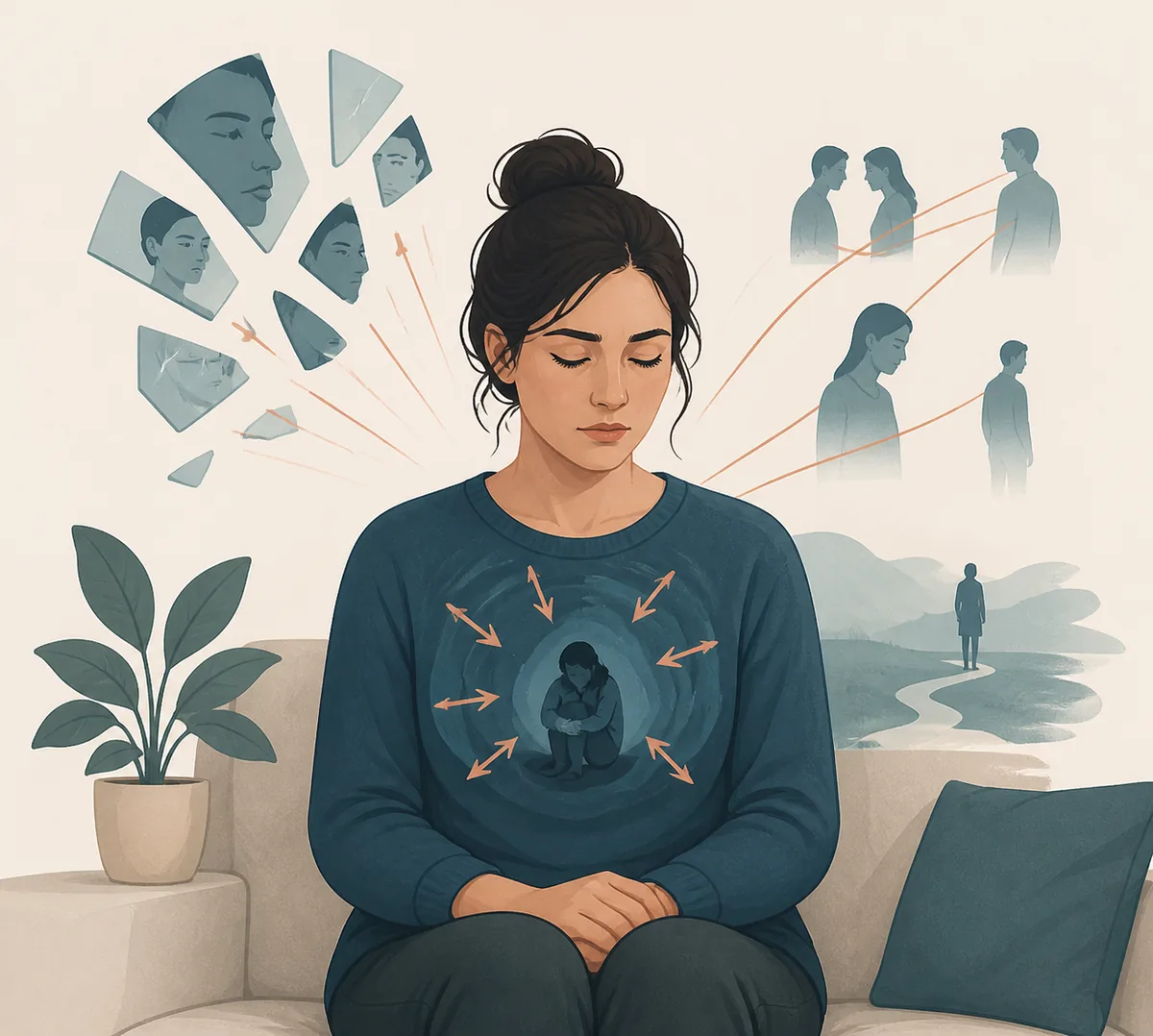
Quiet BPD symptoms are often described as borderline personality disorder patterns that are directed inward rather than expressed through obvious conflict. Someone may look calm, capable, helpful, or high-functioning while privately experiencing rejection sensitivity, shame, emotional overload, self-criticism, withdrawal, or intense relationship fear.
If you searched for quiet BPD symptoms or quiet borderline personality disorder symptoms, this guide can help you organize repeated patterns without turning a search result or self-test into a diagnosis. “Quiet BPD,” “silent BPD,” and “high-functioning BPD” are informal search terms. They can be useful descriptions, but a qualified professional must assess the full pattern, its history, impairment, safety, and other possible explanations.
In this guide
Short answer: Quiet BPD is an informal term for BPD-related distress that is largely hidden, masked, or turned inward. Common patterns can include intense reactions to perceived rejection, people-pleasing, self-blame, private emotional spirals, withdrawal after conflict, unstable self-image, emptiness, and hidden self-destructive urges. These patterns are not proof of BPD, and they can overlap with trauma, anxiety, depression, bipolar disorder, ADHD, autism-related masking, burnout, or an unsafe relationship.
What Does Quiet BPD Mean?
Borderline personality disorder is a mental health condition involving recurring difficulties with emotions, self-image, behavior, and relationships. Public health sources such as the National Institute of Mental Health and the NHS symptom guide describe patterns such as emotional instability, fear of abandonment, rapidly changing self-image, impulsive behavior, and intense or unstable relationships.
The word “quiet” does not create a separate official diagnosis. It usually points to how the distress is expressed or managed. Instead of arguing openly, a person may suppress anger, apologize repeatedly, disappear, overwork, agree with everyone, or punish themselves privately. The outside presentation can look organized while the inner experience is chaotic.
“High-functioning BPD” often emphasizes outward performance: keeping a job, meeting family responsibilities, succeeding at school, or appearing socially capable. “Quiet BPD” emphasizes internalized distress. The terms overlap in everyday language, but neither should be treated as a formal subtype label or a shortcut around a full assessment.
Common Quiet BPD Symptoms and Patterns
These quiet BPD signs are not a diagnosis by themselves. The more useful question is whether several patterns repeat over time, appear in more than one setting, are linked to relationships or self-image, and create meaningful distress or impairment.
| What others may see | What may be happening internally | What to track |
|---|---|---|
| Calm, agreeable, or unusually easygoing | Fear that disagreement will lead to rejection, conflict, or being seen as “too much” | What you wanted to say, what you feared would happen, and what happened afterward |
| Quiet withdrawal after a delayed reply or changed plan | Abandonment panic, shame, rumination, or a wish to avoid asking for reassurance | Trigger, time course, intensity, and whether the withdrawal repeats across relationships |
| High achievement, over-preparation, or constant helping | Self-worth tied to usefulness, approval, perfection, or preventing other people from leaving | Whether rest, mistakes, or boundaries cause disproportionate shame or fear |
| Private spirals that no one else notices | Rapid emotional shifts, emptiness, self-criticism, identity confusion, or hidden urges to escape pain | What changes in mood, self-image, behavior, sleep, relationships, and safety |
1. Rejection sensitivity and prolonged rumination
A short message, a postponed plan, a neutral facial expression, or a request for space may feel like evidence that someone is leaving. The response may stay hidden: replaying the conversation, checking messages repeatedly, imagining the relationship ending, or trying to work out the “right” way to regain approval.
2. People-pleasing, over-apologizing, and difficulty setting boundaries
Some people with internalized BPD patterns become extremely attentive to other people’s needs while losing contact with their own. They may say yes when they mean no, apologize for ordinary needs, accept unfair treatment, or change their preferences quickly to keep closeness stable. A boundary can feel less like a normal limit and more like a risk of abandonment.
3. Emotional suppression followed by private flooding
Quiet does not mean emotionally unaffected. Feelings may be held in until they become overwhelming, then released through crying alone, self-criticism, dissociation, impulsive decisions, substance use, self-harm urges, or an urgent attempt to repair a relationship. The pattern matters more than whether other people witnessed the emotion.
4. Withdrawal, shutdown, or disappearing after conflict
Instead of confronting someone, a person may go silent, stop asking for help, avoid eye contact, cancel plans, or end a conversation abruptly. Withdrawal can protect against immediate shame, but it may also increase isolation and make it harder to test whether the feared rejection was real.
5. Unstable self-image, emptiness, or feeling like a different person
Internalized distress can include a shifting sense of identity: feeling confident and capable in one context, then worthless or unreal after criticism or distance. Some people describe emptiness, not knowing what they want, or relying on a relationship, role, achievement, or other person’s approval to feel solid.
6. Hidden anger, envy, or resentment
Anger may be directed inward rather than expressed openly. Someone may look polite while privately feeling intense resentment, jealousy, or unfairness, then feel guilty for having those emotions. Naming anger safely can be more useful than treating it as evidence of being a bad person or forcing it to disappear.
7. Relationship testing without direct requests
A person may delay replying, withdraw to see who notices, hint at leaving, or create indirect tests of loyalty because asking directly for reassurance feels too vulnerable. These patterns can happen alongside genuine care and fear, but they can still strain relationships. A direct, specific request is usually easier to respond to than an unspoken test.
8. Self-destructive urges that remain hidden
Quiet BPD symptoms can include urges to punish yourself, take unsafe risks, misuse substances, binge, overspend, or cause harm when emotional pain peaks. If you may hurt yourself or someone else, treat safety as the priority and seek immediate local crisis or emergency support. A private presentation does not make a safety risk less serious.
Quiet BPD and Romantic Relationships
People often ask whether someone with quiet BPD hides romantic feelings. Sometimes they do, especially when expressing a need feels dangerous or embarrassing. A person may care intensely, fear losing the relationship, and still avoid saying what they need. They may monitor changes in tone, over-interpret distance, or withdraw before the other person can reject them.
That description is not a diagnosis and it does not excuse controlling, threatening, coercive, or abusive behavior. A healthier focus is the repeated cycle: trigger, interpretation, emotional response, coping action, and repair. Writing the cycle down can show whether the problem is a BPD-like pattern, an unsafe relationship, trauma, anxiety, communication mismatch, or several factors at once. Our BPD relationships guide covers boundaries and repair in more detail.
What Else Can Look Like Quiet BPD?
Symptoms overlap across mental health conditions and life circumstances. A careful assessment looks at timing, developmental history, triggers, sleep and energy changes, substances, trauma, medical issues, relationship safety, and how consistently the pattern affects functioning. The comparison below is a thinking aid, not a diagnostic table.
| Pattern to compare | Clues that may support a broader review | Why a self-label can mislead |
|---|---|---|
| Anxiety or depression | Worry, low mood, withdrawal, shame, sleep or appetite changes, and reduced pleasure can overlap. | These symptoms can be primary, secondary, situational, or part of another pattern; timing and triggers matter. |
| Trauma-related responses | Hypervigilance, avoidance, dissociation, shame, and relationship fear may follow trauma or ongoing danger. | Do not interpret a response to an unsafe situation as a personality disorder without context and safety assessment. |
| Bipolar disorder | Distinct periods of changed sleep, energy, activity, impulsivity, or mood may require a different evaluation. | Fast emotional shifts are not automatically bipolar episodes; duration and associated changes are important. |
| Autism or ADHD-related masking | Social exhaustion, sensory overload, executive-function strain, impulsivity, or developmental differences may be relevant. | Overlap does not mean the conditions are interchangeable. Developmental history and context help separate them. |
For a focused comparison, read our BPD vs autism guide or the BPD vs bipolar self-reflection guide. These pages are not substitutes for an evaluation, but they can help you prepare better questions.
Self-Reflection Questions for Quiet BPD Symptoms
Use these prompts to collect examples rather than produce a score. Note the situation, what you believed it meant, what you felt in your body, what you did next, and what happened afterward.
Safer Next Steps: From Pattern to Support
A useful next step is not to prove that you have quiet BPD. It is to make the pattern clearer and choose support that matches the level of distress.

1. Write down repeated examples
Record what happened before the reaction, how quickly the emotion rose, what you feared, what action you took, and how the situation ended. Examples are more useful to a clinician than a label copied from a social post.
2. Use a self-test only as a reflection tool
If you want a structured first step, the Quiet BPD Test asks about hidden, internalized, and high-functioning patterns. Treat the result as a prompt for questions, not as a diagnosis or proof that another explanation is impossible. If you want a wider screen, compare it with the Comprehensive BPD Test.
3. Bring the full context to a professional
A mental health professional can review symptoms, history, relationships, safety, medical factors, medications, sleep, trauma, and overlapping conditions. Ask what diagnosis is being considered, what alternatives were checked, and what support is available even before a final label is settled.
4. Treat safety concerns as urgent
If you may hurt yourself or someone else, cannot stay safe, or are in immediate danger, contact local emergency services or a crisis line now. In the United States, call or text 988. Elsewhere, use the emergency or crisis service available where you are.
Want a structured quiet BPD self-check?
Use the assessment to organize patterns, then read the result with its limits in mind.
Take the Quiet BPD TestQuiet BPD Symptoms FAQ
What is quiet BPD?
Quiet BPD is an informal term for BPD-related distress that is often hidden, masked, or directed inward. It may involve rejection sensitivity, self-blame, withdrawal, people-pleasing, private emotional overload, and relationship fear, but the term is not a separate official diagnosis.
Is quiet BPD an official diagnosis?
No. Quiet BPD is an informal term for BPD-related symptoms that are often internalized, masked, or directed inward. A professional assessment uses the broader diagnostic picture rather than the label alone.
What are the most common quiet BPD symptoms?
Commonly described patterns include rejection sensitivity, private emotional spirals, self-blame, people-pleasing, withdrawal, unstable self-image, emptiness, hidden anger, indirect reassurance-seeking, and self-destructive urges. These signs overlap with other conditions and are not diagnostic by themselves.
Do people with quiet BPD hide romantic feelings?
Some people may hide feelings or needs because vulnerability feels unsafe, but this is not unique to BPD. Look at the repeated trigger-response cycle, the relationship context, and whether direct communication and boundaries can improve the pattern.
Can quiet BPD look like anxiety or depression?
Yes. Anxiety, depression, trauma responses, burnout, ADHD, bipolar disorder, and autism-related masking can overlap with quiet BPD symptoms. Timing, developmental history, sleep and energy changes, triggers, safety, and relationship patterns help a clinician compare explanations.
Should I take a quiet BPD test?
You can use a self-test to organize observations, but not to diagnose yourself. If the result worries you, bring concrete examples to a qualified professional and seek urgent help if you may not be able to stay safe.
Helpful sources
Medical Disclaimer
This article is for education only. A self-test or symptom list cannot diagnose BPD, rule out another condition, or determine treatment. If you may hurt yourself or someone else, or feel unable to stay safe, contact local emergency services or a crisis service immediately.