Autism vs BPD is not settled by one symptom or one autism spectrum test. A screening questionnaire can flag traits worth discussing, but it cannot decide whether someone has autism, BPD, both, trauma-related symptoms, ADHD, anxiety, or another explanation. The safest comparison looks at developmental history, social communication, sensory and repetitive patterns, emotional timing, relationships, self-image, and safety.
Important: overlap is not proof of either diagnosis
Emotional overload, masking, social exhaustion, rejection sensitivity, trauma, ADHD, depression, anxiety, and relationship stress can resemble parts of both conditions. A symptom list cannot tell you that a previous diagnosis was wrong.

Table of Contents
- Quick answer: what is the main difference?
- Why BPD and autism can look similar
- BPD vs autism comparison table
- What an autism spectrum test can and cannot tell you
- Patterns that may prompt a BPD discussion
- Patterns that may prompt an autism evaluation
- Can someone have both BPD and autism?
- How professional evaluation works
- Frequently asked questions
Quick Answer: What Is the Main Difference?
Autism is a neurodevelopmental condition. Clinicians look for a longstanding pattern involving social communication or interaction differences together with restricted or repetitive behaviors, interests, activities, or sensory differences. The pattern begins in the developmental period, even when a person learns to mask it or receives an autism diagnosis later.
Borderline personality disorder is a mental-health diagnosis involving a persistent pattern that may include intense emotional shifts, unstable relationships or self-image, fear of abandonment, impulsivity, self-harm or suicidal behavior, chronic emptiness, anger, or stress-related dissociation. Not everyone has every feature, and a symptom list alone is not enough. The National Institute of Mental Health overview of BPD emphasizes that symptoms and severity vary between people.
A practical shorthand is that autism evaluation asks about lifelong developmental, social, communication, sensory, and repetitive patterns. BPD evaluation asks about long-term emotion regulation, relationships, self-image, impulsivity, and safety patterns. These questions can be asked together when the history suggests both.
Why BPD and Autism Can Look Similar
People often search for autism and BPD or BPD and autism after noticing experiences that do not fit a simple either-or explanation. The overlap may include:
- Emotional overload: intense feelings can make it difficult to think, speak, or choose a response in the moment.
- Social uncertainty: misunderstandings, ambiguous messages, exclusion, or changes in closeness can create distress.
- Shutdown or withdrawal: a person may go quiet, leave the situation, stop replying, or need a long recovery period.
- Masking and exhaustion: consciously copying social behavior can hide needs and make later burnout hard to interpret.
- Trauma or invalidation: chronic stress can change how a person interprets danger, conflict, and relationships, regardless of diagnosis.
Context matters: sensory overload, trauma, depression, or relationship fear can lead to withdrawal. If attention or impulsivity also matter, compare the BPD and ADHD overlap guide before choosing one label.
Autism vs BPD Comparison Table
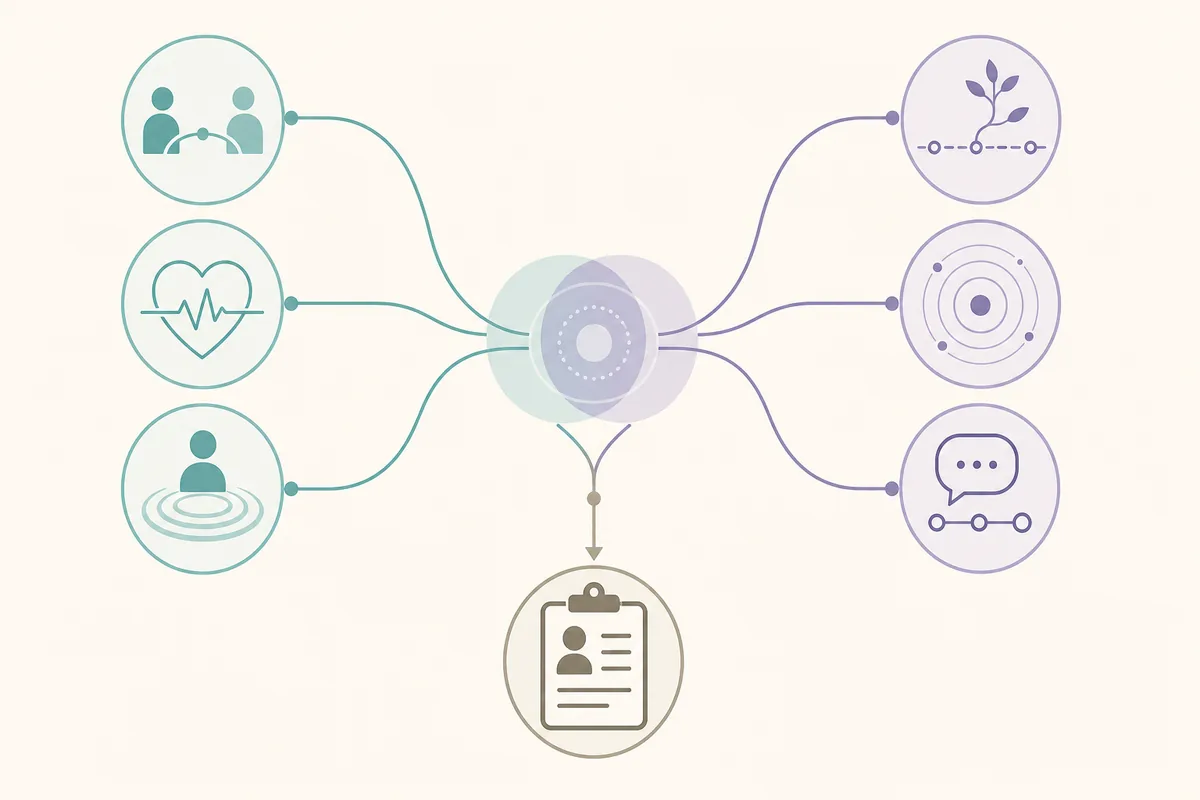
The table is an orientation tool, not a scoring system. Real presentations vary, and some people have meaningful features in both columns.
| Area | Questions that may be relevant to BPD | Questions that may be relevant to autism |
|---|---|---|
| Developmental timeline | Did emotional instability, relationship fear, self-image changes, impulsivity, or self-harm become prominent over time? | Were social-communication differences, sensory needs, repetitive patterns, or a need for predictability present in childhood? |
| Relationships | Do closeness and distance trigger fear, anger, distrust, or urgent efforts to prevent perceived abandonment? | Are difficulties more connected to social reciprocity, unwritten rules, literal communication, sensory load, or predictability? |
| Emotional shifts | Are mood changes rapid, linked to interpersonal events, and accompanied by changes in self-image or relationship interpretation? | Do meltdowns, shutdowns, or intense distress follow sensory overload, accumulated demands, changes in routine, or communication strain? |
| Sensory and repetitive patterns | Sensory sensitivity may occur, but it is not a defining BPD criterion by itself. | Sensory differences, repetitive movements, focused interests, and a strong need for sameness may be central to a lifelong pattern. |
| Self-image | Is there a recurring unstable sense of identity, values, goals, or worth? | Is identity more affected by masking, social expectations, late self-understanding, or different environments? |
| What helps | Emotion-regulation skills, safety planning, boundaries, and evidence-based psychotherapy may be important. | Communication adjustments, sensory support, routines, accommodations, and autism-informed care may be important. |
What an Autism Spectrum Test Can and Cannot Tell You
An online autism spectrum test usually means a self-report screening questionnaire. It may help you notice recurring social-communication, sensory, routine, or focused-interest patterns and decide what to ask a clinician. It is not the same as a diagnostic assessment, and a score should not be compared directly with a BPD screening score.
Autism assessment services commonly combine questionnaires with questions about early life, current behavior, functioning at home or work, and information from someone who knew the person as a child when available. There is no blood test that confirms autism. The NHS autism assessment overview describes this broader history-based process, while NICE guidance for adults covers assessment of suspected autism.
- A screening can do: organize observations, highlight domains to discuss, and suggest that a fuller evaluation may be useful.
- A screening cannot do: confirm autism, rule out BPD, explain trauma, or determine which support is safest for you.
- Use it as a prompt: bring examples, ages, triggers, recovery time, and helpful supports to a clinician.
Patterns That May Prompt a BPD Discussion
A BPD-focused assessment may be worth discussing when the central pattern includes several of the following over time, across meaningful relationships or settings, and with noticeable impact on functioning:
- strong fear of abandonment or urgent attempts to prevent a relationship from ending;
- relationships that shift quickly between intense closeness and anger, distrust, or rejection;
- a markedly unstable sense of self, goals, values, or identity;
- impulsivity, self-harm, suicidal behavior, chronic emptiness, intense anger, or stress-related dissociation.
This does not mean that any one item proves BPD. Trauma, mood disorders, ADHD, substance use, depression, anxiety, autism, and unsafe relationships can change the same experiences. If you want a structured starting point, our safe “Do I Have BPD?” self-check guide explains what screening can and cannot do, while the professional BPD assessment guide explains what to expect next.
Patterns That May Prompt an Autism Evaluation
An autism evaluation may be useful when the history suggests a lifelong pattern of differences in social communication or interaction plus restricted, repetitive, sensory, or sameness-related features. Questions may include:
- Did you need to consciously study or copy social rules rather than intuitively pick them up?
- Have sensory inputs such as sound, light, touch, textures, movement, or crowds consistently affected your energy or ability to function?
- Do changes, interruptions, or unclear expectations create disproportionate distress even when relationships feel safe?
- Have focused interests, repeated movements, routines, or deep topic engagement been present since childhood?
- Do social interactions become easier when communication is explicit, predictable, and less dependent on implied meaning?
Autism can be missed when a person performs well academically, has learned scripts, has a supportive environment, or has been taught to hide distress. Conversely, not every social difficulty or sensory preference indicates autism. The NIMH autism spectrum disorder overview is a useful starting point for the broader developmental framework.
Can Someone Have Both BPD and Autism?
Yes. Some people have a neurodevelopmental autism profile and also develop a separate pattern of emotion regulation, identity, relationship, or safety difficulties that meets criteria for BPD. Others have one condition plus trauma, ADHD, depression, anxiety, or another explanation that creates overlap.
Research on co-occurring autism and personality disorders remains limited. If one diagnosis does not explain your treatment needs, ask for a review of development, sensory history, relationships, safety, and alternatives.
How Professional Evaluation Works
There is no single blood test or online quiz that can reliably separate BPD from autism. A clinician may use interviews, questionnaires, structured tools, developmental history, collateral information, and observation. The process depends on age, access, clinician training, and the question being assessed.
For an autism vs BPD question, the key is whether the full developmental and relational pattern remains consistent across time and settings.
Prepare a short timeline
- Childhood: friendships, language, sensory reactions, routines, interests, school reports, and responses to change.
- Later development: masking, identity changes, mood shifts, self-harm, relationship patterns, and major stress.
- Current function: work or school, burnout, triggers, shutdowns, recovery time, and helpful support.
- Safety: any current risk of self-harm, suicide, violence, abuse, coercion, or inability to stay safe.
Bring examples rather than only labels: what happened, what you noticed, what you did next, how long it lasted, and what helped. A screening result can organize questions, but it cannot identify the cause by itself.
Need a BPD screening starting point?
Our screens are educational, not diagnostic tools or autism assessments.
View BPD screening optionsFAQ About BPD vs Autism
Can BPD and autism occur together?
Yes. Some people meet criteria for both; others have one condition plus trauma, ADHD, depression, anxiety, or another source of overlap. A developmental and mental-health assessment is needed.
Is an autistic meltdown the same as a BPD episode?
Not necessarily. Both can involve intense distress or withdrawal, but triggers, sensory load, interpersonal meaning, duration, and recovery may differ.
Why are women diagnosed with BPD instead of autism?
Masking, missed childhood history, stereotypes, and crisis-focused assessments may contribute. Gender alone cannot determine either diagnosis; ask for a review of developmental and emotional patterns together.
What does an autism spectrum test measure?
It usually screens for self-reported social-communication, sensory, repetitive, or predictability-related traits. It can suggest questions, but cannot confirm autism or distinguish it from BPD.
Can an online BPD test tell the difference between BPD and autism?
No. A BPD screening can start a conversation, but it cannot evaluate autism or distinguish overlapping conditions. Seek qualified assessment when distress or impairment continues.
What should I bring to a BPD or autism evaluation?
Bring a brief timeline, concrete examples, childhood information if available, prior treatment, sensory and communication patterns, emotional triggers, functioning, and safety concerns.
Sources and Further Reading
Medical Disclaimer
This page provides general education, not diagnosis or individualized treatment. If you may harm yourself or someone else, cannot stay safe, or face immediate danger, contact local emergency services. In the United States, call or text 988.