Impulsive BPD is an informal way to describe a pattern of fast, high-risk choices that may appear alongside borderline personality disorder traits. A person may spend, use substances, have unsafe sex, drive recklessly, binge, quit suddenly, send intense messages, or make another decision that brings immediate relief and later regret. The pattern deserves curiosity and support, not a moral label.
Some people also search for self-indulgent BPD. That phrase is not a separate clinical diagnosis, and it can sound blaming. In this guide, it is treated as an older or informal label that may point toward impulsive, sensation-seeking, or self-sabotaging behavior. A full assessment asks what happens before the urge, what the behavior does in the moment, how often it repeats, and what else could explain it.
Quick safety note
Impulsivity can include self-harm, suicidal behavior, overdose risk, unsafe sex, dangerous driving, aggression, or financial harm. If you may act on an immediate urge to hurt yourself or someone else, contact emergency services or a local crisis service now. In the United States, call or text 988.
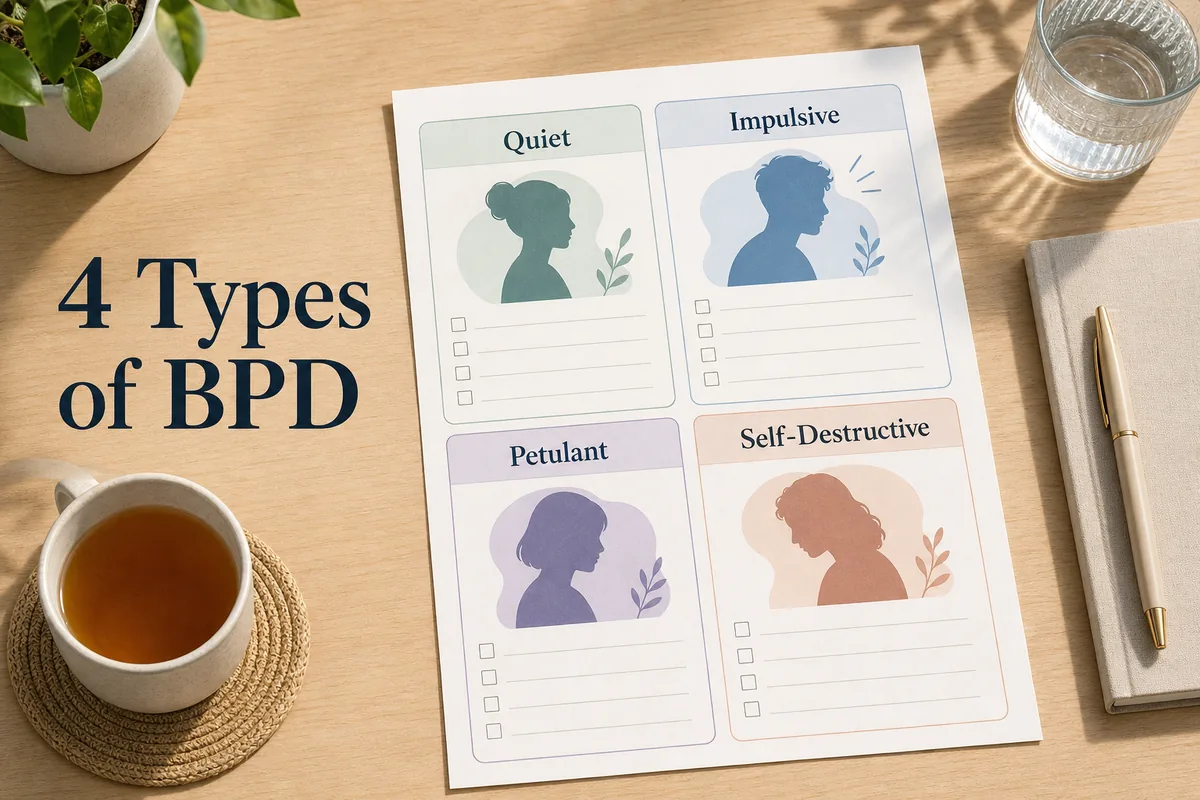
Table of Contents
Quick Answer: What Does Impulsive BPD Mean?
The phrase usually describes a BPD-related pattern in which emotional urgency and difficulty pausing lead to quick, risky, or self-defeating actions. The action may be aimed at escaping emptiness, shame, anger, boredom, rejection fear, or unbearable tension. It may feel automatic, but the behavior still has a context that can be mapped and treated.
Borderline personality disorder is diagnosed through a broader clinical picture that can include unstable relationships, abandonment fear, identity disturbance, intense mood reactivity, chronic emptiness, anger, dissociation, self-harm risk, and impulsivity. Not every person has every feature. The National Institute of Mental Health overview of BPD is a useful starting point, but an online article or impulsive BPD test cannot confirm a diagnosis.
Impulsive BPD Signs and Everyday Examples
The following examples are prompts for reflection, not a checklist that proves BPD. Concern rises when the behavior is repeated, difficult to control, out of proportion to the situation, and linked to meaningful harm or impairment.
- Rapid spending or financial decisions: buying items, giving money away, gambling, or taking on commitments to change an emotional state quickly.
- Risky substance use: using alcohol or drugs to shut down distress, escalating use during conflict, or taking combinations without considering safety.
- Sexual or relationship risk: seeking intense closeness, making a sudden sexual decision, or ending and restarting a relationship during a spike in emotion.
- Sudden exits: quitting a job, dropping a class, moving, blocking someone, or sending an ultimatum before the feeling has settled.
- High-intensity communication: repeated calls, long messages, public posts, accusations, or declarations that are later regretted.
- Self-sabotage: breaking a helpful routine, rejecting support, or choosing an outcome that confirms a painful belief such as “people always leave.”
Impulsive behavior is not always loud. A person may look calm while privately making a dangerous plan, hiding a purchase, taking an unnecessary risk, or using self-punishment to end emotional discomfort. The outside behavior and the internal distress do not always match.
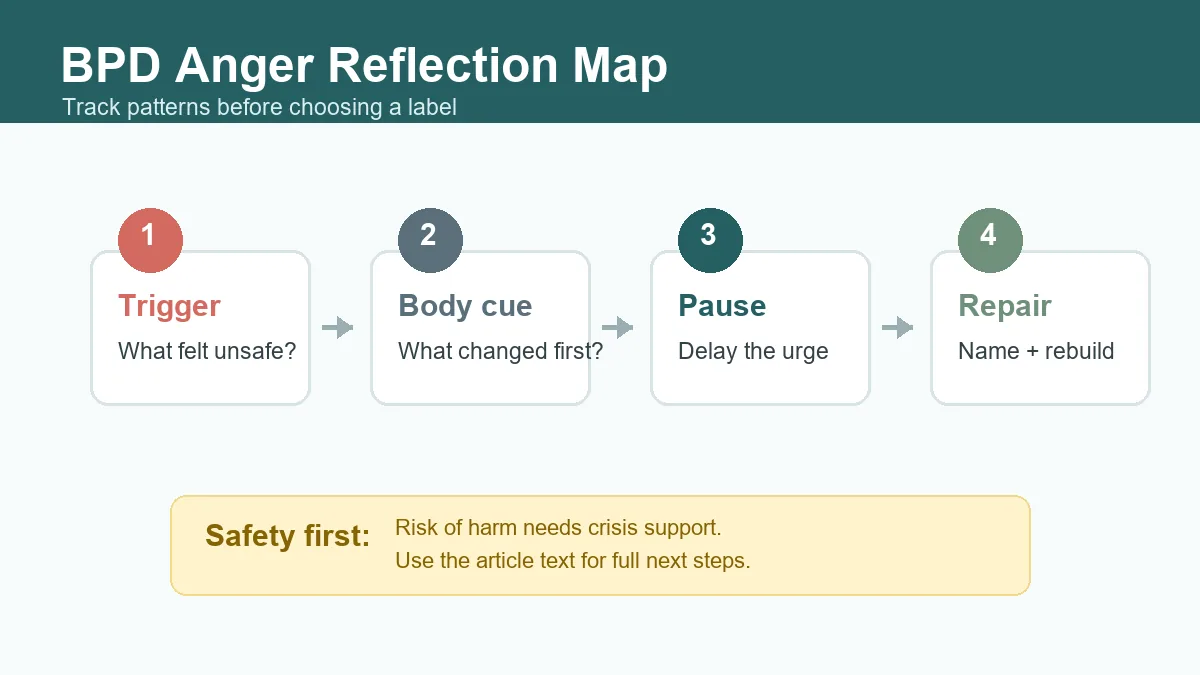
The Trigger–Urge–Consequence Cycle
Instead of asking only “Why did I do that?”, track the sequence. This preserves responsibility without turning the behavior into a character judgment.
| Stage | What to notice | Safer interruption |
|---|---|---|
| Trigger | Rejection, boredom, conflict, shame, loneliness, criticism, or an unexpected change. | Name the event in one sentence and delay the irreversible choice. |
| Body cue | Heat, racing heart, numbness, agitation, tunnel vision, or the feeling that action must happen now. | Move away from the trigger, slow breathing, drink water, or contact a safe person. |
| Urge | Spend, send, use, drive, leave, retaliate, or self-harm to get immediate relief. | Set a short timer, remove access to the risk where possible, and write the likely next-day cost. |
| Aftermath | Relief followed by shame, fear, debt, conflict, injury, or renewed emptiness. | Repair what can be repaired and record what support would have helped earlier. |
Impulsive BPD vs Other Informal Patterns
Online subtype models often group BPD patterns as quiet or discouraged, impulsive, petulant, and self-destructive. These labels are descriptive shortcuts, not official diagnoses, and one person may move between them depending on stress, context, and support.
| Informal pattern | Common emphasis | What not to assume |
|---|---|---|
| Impulsive | Fast risk-taking or self-defeating action used to escape an intense state. | It is not proof of thrill-seeking or bad character. |
| Quiet or discouraged | Distress turned inward through withdrawal, self-blame, or hidden overwhelm. | A calm appearance does not rule out serious risk. |
| Petulant | Relational protest, irritability, resentment, or testing when closeness feels uncertain. | Anger alone does not diagnose BPD. |
| Self-destructive | Self-sabotage, self-punishment, or harm-focused behavior. | Impulsive and self-destructive patterns can overlap but are not identical. |
Our 4 types of BPD guide gives the broad comparison. This page narrows the focus to the moment-to-moment decision loop and the practical question: what can create enough space for a safer choice?
Impulsive BPD Self-Reflection Questions
Use these questions as a structured journal prompt rather than a diagnostic score. Answer with recent examples and note what happened before and after the behavior.
- What feeling was strongest immediately before the urge?
- Did the action promise relief, closeness, revenge, escape, stimulation, or numbness?
- How quickly did the decision move from thought to action?
- What body cue told me that I had crossed into urgency?
- Was the behavior a repeated pattern or a response to one unusual crisis?
- What did I risk: money, health, safety, trust, housing, work, or recovery?
- What would a ten-minute delay have changed?
- Who could I contact before acting next time?
- Did sleep loss, medication changes, substances, or stress make the urge stronger?
- What repair is needed now, and what boundary would prevent repeat harm?
Other Explanations for Impulsivity
Impulsivity is not specific to BPD. Similar behavior can appear with bipolar mood episodes, ADHD, trauma-related responses, substance use, sleep deprivation, depression, anxiety, medication effects, grief, or a high-conflict environment. The timing matters. A clinician may ask whether choices are brief reactions to interpersonal events, part of a longer period of unusually high energy and reduced need for sleep, or linked to attention, sensory, trauma, or substance patterns.
That is why a single impulsive BPD test can mislead. A result may describe current traits without explaining development, context, medical factors, or risk. If a label does not fit your lived experience, ask for a broader review rather than trying to force yourself into one subtype.

Evaluation and Safer Next Steps
A professional evaluation usually starts with a detailed history rather than a subtype quiz. Bring examples of impulsive choices, triggers, duration, consequences, relationships, sleep, substances, self-harm thoughts, and what has helped. Our guide to getting tested for BPD explains the difference between self-screening and professional assessment, while the comprehensive BPD test can be used as a conversation aid rather than a diagnosis.
A small plan for the next urge
- Delay any irreversible action for a short, specific period.
- Reduce access to the immediate risk: cards, substances, keys, weapons, or a high-conflict chat.
- Tell one trusted person exactly what you are tempted to do.
- Choose a body-based reset such as walking, cold water, paced breathing, or grounding.
- Review the event later with a clinician or support person and repair practical harm.
Want a broader starting point?
Subtype language can help you describe a pattern, but a full screening looks across the wider BPD symptom picture.
Take the Comprehensive BPD TestFrequently Asked Questions
Is impulsive BPD an official diagnosis?
No. It is an informal description of a pattern that may occur in someone with BPD or another condition. A clinician evaluates the full presentation rather than assigning an online subtype.
Is self-indulgent BPD the same as impulsive BPD?
People sometimes use the terms similarly, but “self-indulgent” can sound blaming and is not a standardized diagnostic term. “Impulsive BPD” is the clearer search and education label for fast, risky, or self-defeating behavior.
Can an impulsive BPD test tell me whether I have BPD?
No. A questionnaire can organize observations and suggest questions for a clinician, but it cannot separate BPD from bipolar disorder, ADHD, trauma, substance effects, or other explanations.
Can someone have impulsive and quiet BPD traits?
Yes. Informal patterns can change across settings and stress levels. Someone may hide distress at work and make risky decisions privately or during a relationship crisis.
What should I do if impulsivity is becoming dangerous?
Contact a licensed mental-health professional promptly and make a concrete safety plan. If you may hurt yourself or someone else, call emergency services or call or text 988 in the United States.
Further reading
Medical Disclaimer
This article is for educational purposes only and does not provide a diagnosis, treatment plan, or emergency support. If you are in immediate danger or may harm yourself or someone else, call emergency services or a local crisis hotline now.