A BPD anger test is not a diagnosis. It is a structured way to notice whether intense anger, sudden rage, resentment, or relationship conflict may be part of a broader borderline personality disorder pattern.
If you searched for a "BPD anger test," you may be trying to understand reactions that feel too fast, too strong, or too hard to repair afterward. You might feel calm one moment and overwhelmed by hurt, rejection, jealousy, shame, or panic the next. This guide helps you separate ordinary anger from repeated patterns that deserve broader screening, therapy support, or urgent safety help.
In this guide
Short answer: BPD-related anger is most concerning when it is intense, fast-moving, tied to perceived rejection or abandonment, hard to control, followed by shame or repair attempts, and part of a wider pattern that includes mood shifts, unstable relationships, impulsivity, emptiness, identity confusion, dissociation, or self-harm risk.
What BPD Anger Can Look Like
The National Institute of Mental Health lists inappropriate, intense anger or problems controlling anger among possible BPD symptoms. That does not mean every angry person has BPD. The clinical question is whether anger appears inside a repeated pattern of emotional instability, relationship fear, impulsive behavior, and difficulty returning to baseline.
BPD anger can feel like a threat response. A delayed text, cancelled plan, criticism, facial expression, change in tone, or fear that someone is pulling away may feel emotionally dangerous. The anger may show up as yelling, sarcasm, accusations, blocking, testing, ultimatums, silent treatment, impulsive messages, or sudden withdrawal. Under the anger there may be panic, shame, grief, loneliness, or fear of being abandoned.
Some people express anger outwardly. Others turn it inward through self-blame, self-punishment, isolation, over-apologizing, or private self-destructive urges. If your anger is mostly hidden, compare this guide with our Quiet BPD Test. If anger comes out through protest, resentment, and relationship testing, the Petulant BPD Test guide may also be relevant.
BPD Anger Test: 12 Self-Reflection Questions
Use these questions as a pattern check, not a score sheet. Answer based on repeated experiences over months or years, especially in close relationships. One intense argument does not prove BPD. A repeated cycle that harms relationships, work, school, safety, or self-respect deserves closer attention.
How to interpret your answers
If only a few questions fit during a stressful week, start by tracking sleep, alcohol or drug use, grief, burnout, conflict, trauma reminders, and relationship stress. If many questions describe a long-term cycle, especially with abandonment fear, unstable relationships, impulsive behavior, chronic emptiness, identity shifts, self-harm risk, or dissociation, a broader Comprehensive BPD Test is a better next step than an anger-only checklist.
Write down real examples. Instead of "I have BPD rage," write "When my partner changed plans, I felt replaced, sent six accusing texts, blocked them, then panicked and apologized two hours later." Specific examples help you and a professional see the trigger, interpretation, urge, action, consequence, and repair attempt.
Common BPD Anger Triggers and Body Cues
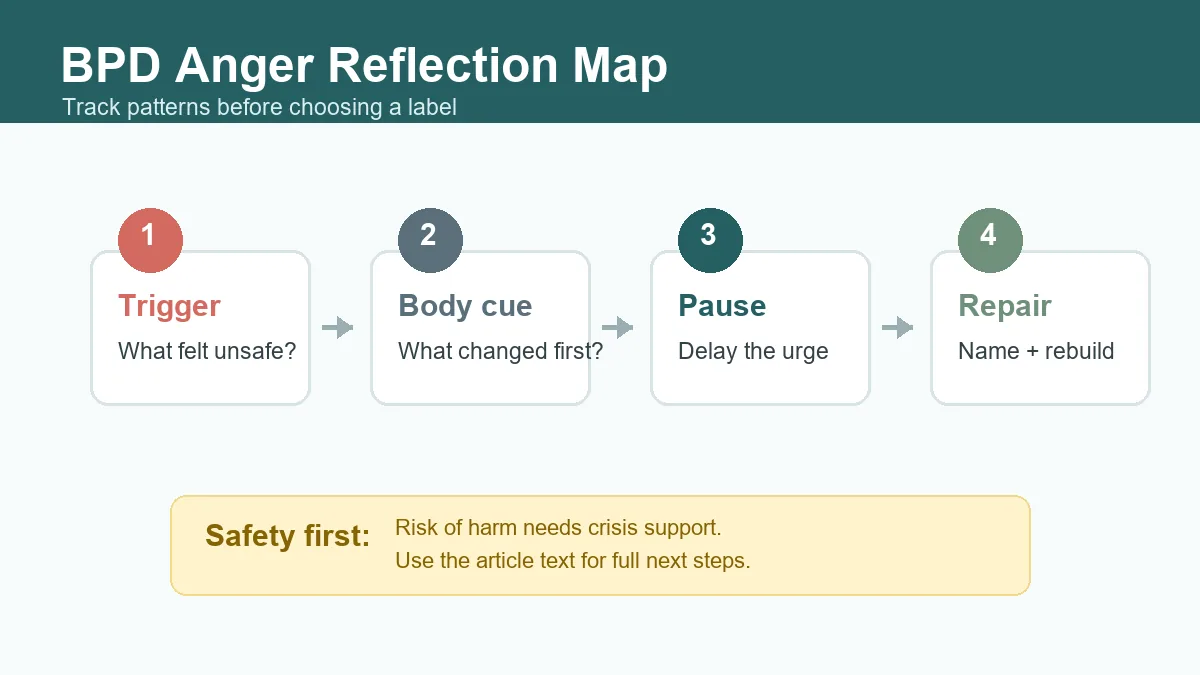
Anger is easier to manage when you catch the early pattern. Many people focus only on the outburst, but the useful information often appears before it. A trigger is the event or interpretation that starts the alarm. A body cue is the physical warning sign. An urge is what anger wants you to do. A repair step is what helps protect the relationship and your safety after the emotion settles.
| Pattern to track | Examples | Helpful question |
|---|---|---|
| Trigger | Delayed reply, criticism, changed plan, feeling excluded, neutral tone, perceived rejection | What did I believe this meant about the relationship? |
| Body cue | Heat, shaking, tight chest, racing thoughts, clenched jaw, numbness, urge to move fast | What was the first physical sign that my threat system was turning on? |
| Urge | Accuse, test, block, leave, shout, self-punish, drink, drive, send a long message | What did the urge promise to fix in the short term? |
| Cost | Fear, shame, damaged trust, lost sleep, unsafe behavior, more distance from the person | What happened after the relief faded? |
| Repair | Pause, name the trigger, apologize for the behavior, request a reset, make a safety plan | What would protect both honesty and trust next time? |
BPD Anger vs Other Explanations
Anger can come from many sources. BPD is only one possible explanation. Trauma responses, depression, anxiety, ADHD, substance use, sleep deprivation, relationship abuse, medical stress, bipolar disorder, intermittent explosive disorder, and ordinary conflict can all affect anger. The Mayo Clinic describes BPD as involving self-image, relationship, emotional, and impulsive patterns, so an anger-only checklist is too narrow for diagnosis.
The timing matters. BPD-like anger is often reactive to a perceived relationship threat and may shift within hours. Bipolar irritability is usually evaluated in the context of broader mood episodes that affect sleep, energy, activity, and thinking. Intermittent explosive disorder focuses more on repeated aggressive outbursts that are out of proportion to the situation. A clinician looks at the whole pattern, not just one symptom word.
Safety also matters. If anger leads to self-harm urges, suicidal thoughts, threats, violence, stalking, unsafe driving, intoxicated decisions, or fear that someone may be harmed, do not wait for an online test. In the United States, call or text 988 for the Suicide & Crisis Lifeline, or call 911 for immediate danger. Outside the United States, use your local emergency or crisis service.
Need a broader BPD screening picture?
Use a full assessment when anger appears alongside abandonment fear, impulsivity, emptiness, identity shifts, or unstable relationships.
Take the Comprehensive BPD TestWhat to Do With Your BPD Anger Test Answers
The goal is not to prove a label. The goal is to reduce harm, understand triggers, and decide what support fits. NICE guidance for borderline personality disorder emphasizes helping people manage distress, anxiety, worthlessness, anger, and relationships through structured care rather than quick labels.
- Track three recent episodes: Write the trigger, body cue, urge, action, consequence, and repair attempt for each one.
- Look for the relationship meaning: Ask whether the anger was protecting fear, shame, grief, loneliness, or feeling replaceable.
- Use a pause rule: Delay texts, driving, spending, substances, or break-up decisions until your body has cooled.
- Repair behavior, not emotion: Anger itself is information. Harmful actions still need clear repair and boundaries.
- Screen broadly: Use the BPD Symptoms Test guide or a full assessment if anger is only one part of a wider pattern.
- Bring examples to care: A therapist can use real episodes to evaluate BPD, trauma, bipolar disorder, ADHD, substance use, relationship safety, or another explanation.
FAQ
Is there a real BPD anger test?
There is no standalone clinical test that diagnoses BPD from anger alone. A BPD anger test should be treated as self-reflection that helps you decide whether broader screening or professional assessment is appropriate.
Is BPD rage always loud or aggressive?
No. Some people express anger outwardly through conflict, accusations, or yelling. Others turn anger inward through self-blame, withdrawal, self-punishment, or hidden resentment.
What triggers BPD anger?
Common triggers include perceived rejection, abandonment fear, criticism, feeling ignored, sudden plan changes, jealousy, shame, or a belief that someone important no longer cares.
Can BPD anger look like bipolar irritability?
Yes, they can look similar from the outside. Clinicians compare timing, triggers, sleep, energy, mood episodes, relationship patterns, impulsive behavior, and other symptoms before making a diagnosis.
When is anger an emergency?
Anger becomes urgent when there is risk of self-harm, suicide, violence, threats, unsafe driving, severe dissociation, or inability to stay safe. Use emergency or crisis support immediately in those situations.
Medical Disclaimer
This article is for educational purposes only and does not provide a diagnosis, treatment plan, or emergency support. If you are in immediate danger or may harm yourself or someone else, call emergency services or a local crisis hotline now.