BPD test for someone else is usually the wrong way to think about an online screen. A supporter can help a loved one find a questionnaire, sit nearby, or share observations with permission, but a score completed by another person cannot diagnose BPD. The safer goal is to support the person's own voice, protect privacy, and make a professional conversation easier.
Quick answer
Do not secretly complete, submit, or interpret a BPD test in someone else's name. Ask what help they want, let them decide whether to take the screen, and use concrete examples rather than labels. If there is immediate danger or someone may be harmed, use local emergency or crisis services instead of waiting for an online result.
A BPD test for someone else is therefore best treated as a request for support, not a proxy diagnosis. The person remains the decision-maker about screening, records, and professional care.
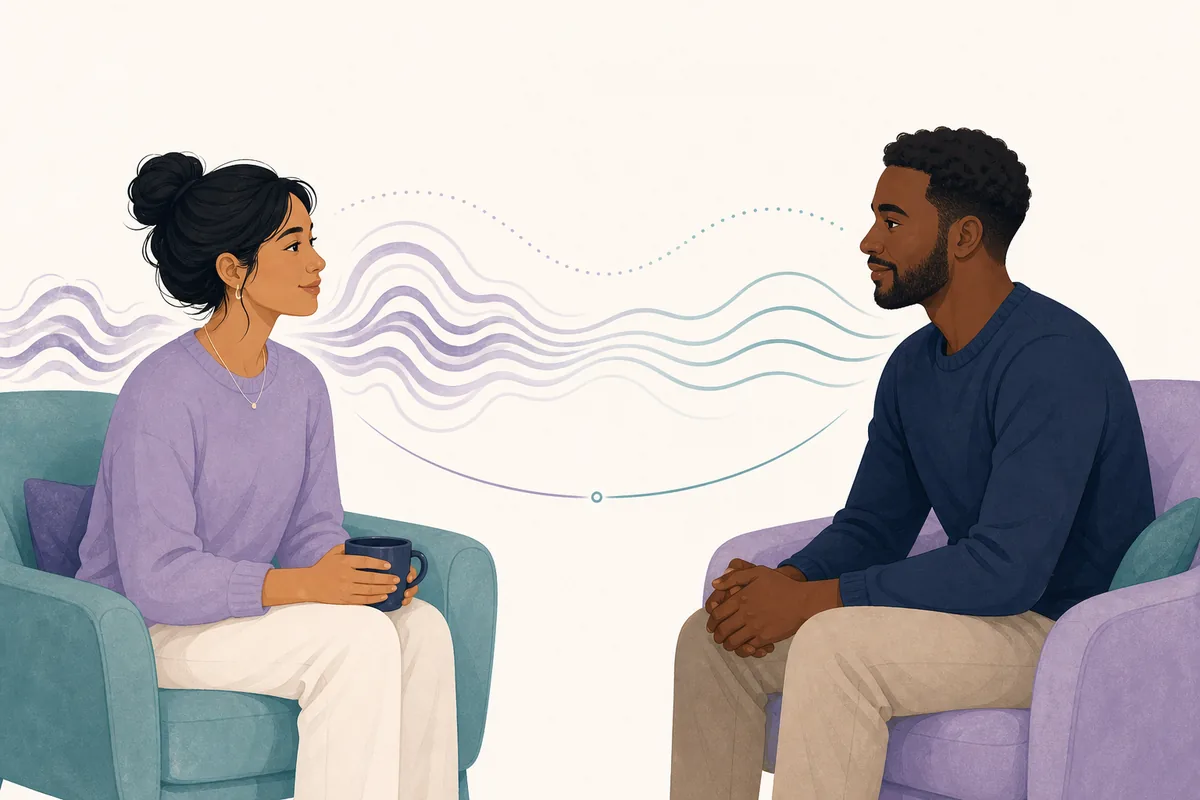
Table of Contents
What a BPD Test Can and Cannot Do
An online BPD questionnaire is a screening aid. It may ask about emotional shifts, fear of abandonment, impulsive behavior, self-image, anger, emptiness, dissociation, or self-harm. The answers can help the person decide which questions to bring to a licensed mental health professional. They do not establish a diagnosis, explain the cause of a behavior, or tell a supporter what to do in a crisis.
The person taking the screen is the best source for private thoughts, urges, shame, trauma history, and experiences that are not visible from the outside. A partner, friend, parent, or coworker may notice a different part of the picture. Neither perspective is a complete assessment. The National Institute of Mental Health overview of BPD describes a varied condition whose symptoms and severity differ between people.
What a Supporter Can Observe Safely
Observation is useful when it stays descriptive. Record what happened, when it happened, what changed, and what support helped. Avoid writing “they are manipulative” or “this proves BPD.” A neutral record gives the person and clinician something concrete to discuss without turning a relationship conflict into a label.
| Describe the event | Include context | Leave the conclusion open |
|---|---|---|
| “After the plan changed, they sent several messages and then stopped replying.” | Note the date, trigger, duration, sleep or substance changes, and what happened before and after. | Ask whether the person experienced fear, anger, shame, overload, or something else. |
| “They said they felt empty and could not identify what they wanted.” | Record the person's own words when they agree, plus impact on work, school, or daily tasks. | Do not translate a feeling into a diagnosis or assume the cause. |
| “They mentioned self-harm or not feeling safe.” | Take the statement seriously and note whether there is immediate danger. | Move to urgent local help; do not wait for a test score or investigate alone. |
Keep notes private and store only what is needed. Do not record calls, share screenshots, or send a questionnaire to a clinician without asking the person first, unless a genuine emergency requires you to contact emergency services. Privacy is part of support, not a reward the person must earn.

Consent, Privacy, and the Person's Voice
NICE guidance says professionals should ask whether a person with BPD wants family or carers involved, subject to the person's consent and rights to confidentiality. That principle applies to everyday support too. Before offering to help with a BPD test, ask a simple question: “Would you like company, help reading the questions, or space to do this privately?” Accepting “no” protects trust and keeps the assessment centered on the person.
Support can be collaborative without becoming surveillance. Agree on what may be shared, with whom, and for what purpose. The person may want you to attend an appointment but not speak for them. They may want you to give a short timeline to a clinician but not disclose childhood events or messages. A clinician can explain what information is useful and what can remain confidential.
A consent-first script
- “I have noticed you have been under a lot of pressure. How would you like me to help?”
- “Would you like me to sit with you while you take a screen, or would privacy feel better?”
- “If you decide to talk with a professional, may I share the few observations you choose?”
- “You can change your mind about what I share. I will not use a test to label you.”
How to Suggest a Professional Assessment
Choose a calm moment rather than the peak of an argument. Lead with care and a specific observation, not a diagnosis: “I have noticed that changes in plans have been exhausting and that you have mentioned feeling unsafe. Would you be open to asking a clinician what support might help?” The person can decide whether BPD, trauma, ADHD, autism, mood symptoms, or another concern belongs in that conversation.
A professional assessment looks beyond a single relationship incident. NICE's public information explains that an assessment may ask about thoughts, feelings, behavior, coping, other mental health problems, daily life, and risks to self or others. A supporter can help prepare a short timeline and attend if invited, but the clinician still needs to hear directly from the person.
If the person does not want an assessment, you can still set boundaries around what you can safely do. You cannot force insight with a quiz. You can say what you are available for, what you will not keep secret, and when you will contact emergency help because someone is in immediate danger.
Helping Before and After an Appointment
With permission, help the person prepare a one-page note. Useful headings include current concerns, examples and dates, sleep or substance changes, past treatment, medications, strengths, questions, and safety concerns. Bring the person's own wording and distinguish what you saw from what they told you. This reduces memory pressure without turning the appointment into a case file.
- Before: confirm the appointment, check access needs, and ask what role the person wants you to have.
- During: listen, take notes only with permission, and offer an observation briefly when invited.
- After: ask what was helpful, what felt uncomfortable, and whether the care plan or follow-up is clear.
When Safety Concerns Need Urgent Help
If someone may harm themselves or another person, has access to a weapon, cannot stay safe, is being abused, or faces immediate danger, move away from online testing and contact local emergency or crisis services. In the United States, call or text 988; call 911 for immediate danger. Elsewhere, use the local equivalent. Do not promise to keep an imminent safety risk secret, and do not try to provide emergency care alone.
NICE recommends that professional care discuss risk and agree on support. That does not give a supporter a private crisis protocol or permission to investigate someone. If you are unsure whether a situation is urgent, contact a local crisis service and describe the observable facts. Your role is to connect people with help, not to decide a diagnosis.
Supporter Boundaries and Self-Care
Supporting a loved one can become exhausting when every call, message, or conflict feels like a test. Make your limits specific: “I can talk for 20 minutes,” “I will reply tomorrow after work,” or “I will leave if there is shouting.” A boundary is about your action, not a demand that the other person feel differently.
Keep your own sleep, friendships, private records, finances, and access to counseling. Family or carer support groups may be useful where available. Compassion does not require accepting threats, coercion, stalking, violence, or repeated privacy violations. If you need a broader explanation of relationship patterns, read BPD in relationships; if you need to understand the assessment process, read how BPD assessment works.
Want a private starting point?
Our BPD screens are educational prompts for the person taking them. They are not a way to diagnose someone else.
View BPD screening optionsFAQ About Taking a BPD Test for Someone Else
Can I take a BPD test for my partner?
You can help your partner access a screen or sit nearby if they ask, but do not answer in secret or submit it as their result. The person needs to describe private thoughts and decide what the result means for their next step.
Can a parent complete a BPD questionnaire for a child?
A parent or caregiver may provide developmental and behavior information during an age-appropriate assessment, but an online adult BPD test is not a child diagnosis. Ask the child's clinician how consent, assent, privacy, and caregiver observations should be handled.
Can I ask a clinician to diagnose someone who refuses help?
You can ask a clinician or crisis service for guidance about your own safety and what you have observed. A clinician generally cannot diagnose an absent adult from a third-party story, and you should not promise that a consultation will stay secret if there is immediate danger.
What should I write down before an assessment?
With permission, note dates, observable events, the person's own words, context, duration, impact on daily life, what helped, prior care, and current safety concerns. Keep the record private and separate facts from interpretations.
What if the person says an online test proves they have BPD?
Acknowledge that the result feels important, then explain that screening is a conversation starter rather than a diagnosis. Ask what questions they want to take to a professional and avoid arguing about a score.
What if I feel unsafe supporting someone?
Prioritize your safety and contact local emergency, crisis, domestic-violence, or mental-health support as appropriate. A BPD label never requires you to stay in an unsafe situation or manage a crisis alone.
Sources and Further Reading
Medical Disclaimer
This page provides general education, not diagnosis or individualized treatment. If you may harm yourself or someone else, cannot stay safe, or face immediate danger, contact local emergency services. In the United States, call or text 988.